
WLS-9YQ-LD1
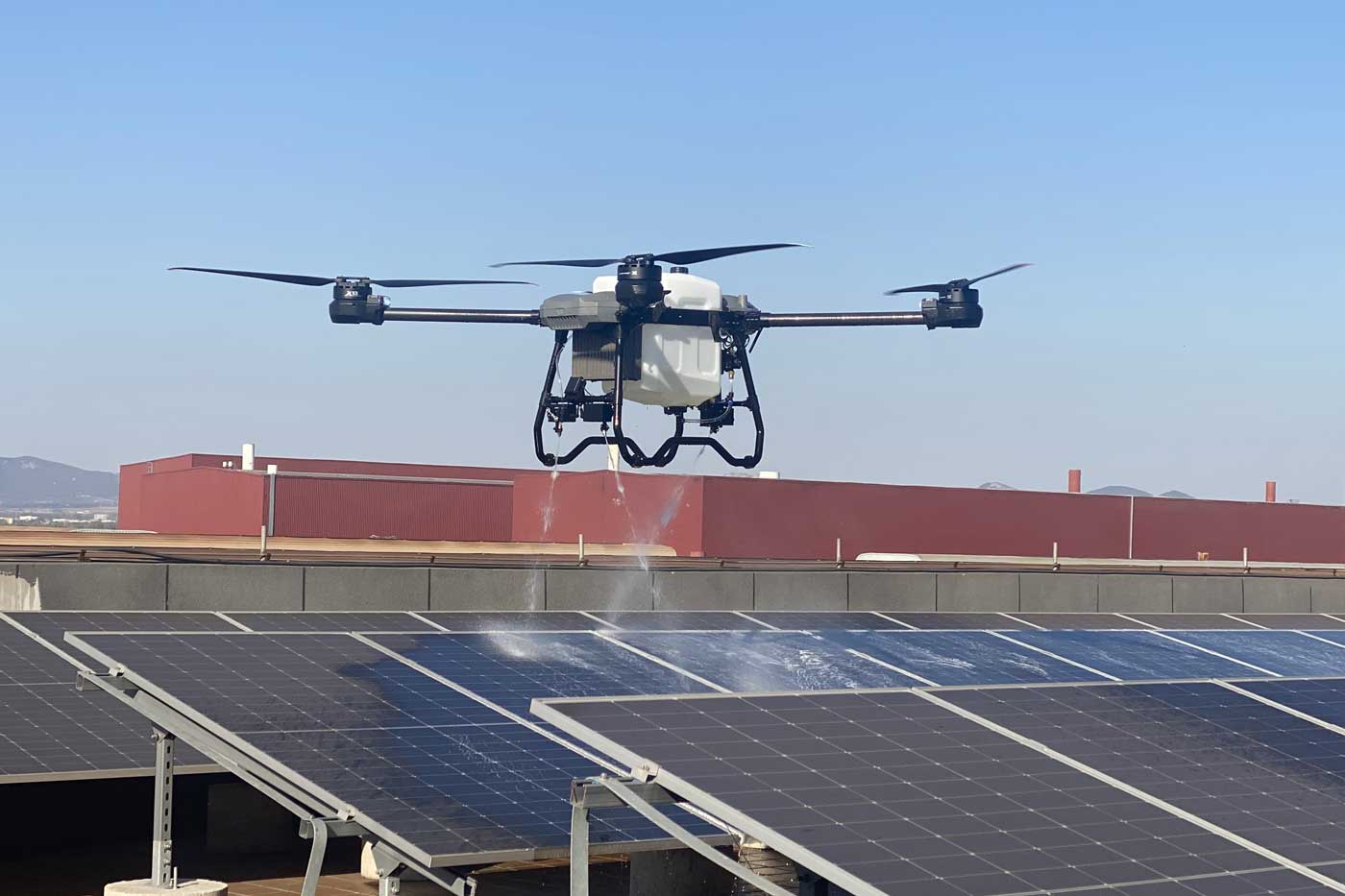
Autonomous Solar Panel Cleaning Drone
In 2026, the global solar industry is moving beyond manual labor toward Autonomous O&M (Operations & Maintenance). Traditional cleaning methods are no longer viable for massive Utility-Scale projects due to water scarcity and high labor costs. The WLS-9YQ-LD1 represents the pinnacle of Solar UAV Technology, offering a non-destructive, water-efficient, and AI-guided cleaning solution designed to maximize PR (Performance Ratio) and ensure LCOE (Levelized Cost of Energy) efficiency.
.jpg)
-1024x701.jpg)
Key Technical Innovations & Strategic Benefits
1. High-Payload Capacity for Industrial-Scale Efficiency
Massive 60kg Payload: Unlike standard industrial drones, the WLS-9YQ-LD1 is a heavy-lifter. It carries up to 60kg of cleaning fluid, drastically reducing “water-refill” downtime and enabling a cleaning efficiency of 200–500 m² per cycle.
Dual-Antenna RTK Precision: Leveraging Real-Time Kinematic (RTK) positioning, the drone achieves centimeter-level flight accuracy. This ensures zero-miss coverage of panels and prevents collisions in complex terrains.
2. Zero-Contact & Non-Destructive Cleaning
Protecting Module Integrity: Traditional brush-based robots can cause micro-cracks or abrasions on the tempered glass. Our 2.5 MPa high-pressure spray system ensures a zero-contact cleaning process, preserving the panel’s anti-reflective coating and long-term warranty.
Advanced Flight Stability: With a maximum takeoff weight of 110kg and a robust 1890mm wheelbase, the drone maintains stable hover even in windy conditions typical of desert or coastal solar farms.
.jpg)
-755x1024.jpg)
3. All-Terrain Versatility: From Deserts to Floating PV
Terrain-Agnostic Design: Whether it’s Mountainous PV, Floating Solar (FPV), or C&I Rooftops, the WLS-9YQ-LD1 bypasses all ground obstacles. It is the ideal solution for sites where ground robots or manual teams cannot safely reach.
Night-Operations Ready: Equipped with FPV HD cameras and powerful landing lights, the system supports 24/7 cleaning, allowing operators to avoid peak sun hours and minimize thermal shock to the panels.
Product Specifications (Technical Data)
| Parameters | Specifications |
| Max Take-off Weight | Up to 110 kg |
| Payload Capacity | 60 kg (Cleaning liquid) |
| Max Working Speed | 10 m/s (Adjustable) |
| Flight Time | 35 mins (Empty) / 9 mins (Full Load) |
| Charging Time | 8–10 mins (Ultra-fast industrial charging) |
| Cleaning System | 2.5 MPa High-Pressure / 3-Nozzle Array |
| Flow Rate | 20 L/min |
| Durability | Aviation-grade Aluminum / Enclosed Core |
FAQ
Q1: What is the best way to clean solar panels in mountainous or hard-to-reach areas?
A: The most efficient method for cleaning solar panels in complex terrains (like mountains, hills, or high rooftops) is using an Autonomous Cleaning Drone like the WLS-9YQ-LD1. Unlike ground robots that require tracks or manual labor that poses safety risks, drones offer a terrain-agnostic solution with high-pressure water systems that reach any angle without physical contact.
Q2: Does drone cleaning damage solar panels or cause micro-cracks?
A: No. High-quality cleaning drones utilize non-destructive, zero-contact technology. By using high-pressure spray (2.5 MPa) instead of mechanical brushes, the WLS-9YQ-LD1 removes dust, bird droppings, and “soiling” without the risk of micro-cracks or scratches, ensuring the longevity of your PV modules.
Q3: How much water can a solar cleaning drone save compared to manual washing?
A: Intelligent UAVs are significantly more eco-friendly. The WLS-9YQ-LD1 features a smart route-planning algorithm and precision nozzles that reduce water consumption by 30% to 50% compared to traditional manual pipe flushing. This makes it an essential tool for ESG-compliant solar operations in arid regions.
Q4: Can cleaning drones operate at night to maximize solar energy yield?
A: Yes. The WLS-9YQ-LD1 is equipped with dual-antenna RTK for precision navigation and FPV HD cameras with landing lights, enabling safe and accurate nighttime operations. Cleaning at night prevents thermal stress on the glass and ensures panels are at peak efficiency the moment the sun rises.
Q5: What is the ROI of switching to autonomous drone cleaning for utility-scale PV?
A: Switching to the WLS-9YQ-LD1 reduces labor costs, eliminates the need for expensive ground-based infrastructure, and increases the Performance Ratio (PR) by ensuring frequent, high-quality cleaning. The ultra-fast 8-10 minute charging time ensures maximum uptime, significantly lowering the Levelized Cost of Energy (LCOE).