
A roller brush is the hardest-working part of any solar panel cleaning machine. It touches thousands of square meters of glass a day, it is the first line of defense against soiling losses, and it is also the part that wears out fastest. Yet in our conversations with O&M contractors and EPC crews, solar panel cleaning brush roller replacement is often treated as an afterthought — crews keep cleaning until the bristles are visibly bald, then scramble to find a spare.
This guide walks through when to replace a roller brush, how to choose the right replacement, and the exact disassembly steps for two common machine types: water-fed pole brushes and tracked cleaning robots. Treat it as a playbook your field team can follow, not a sales pitch.
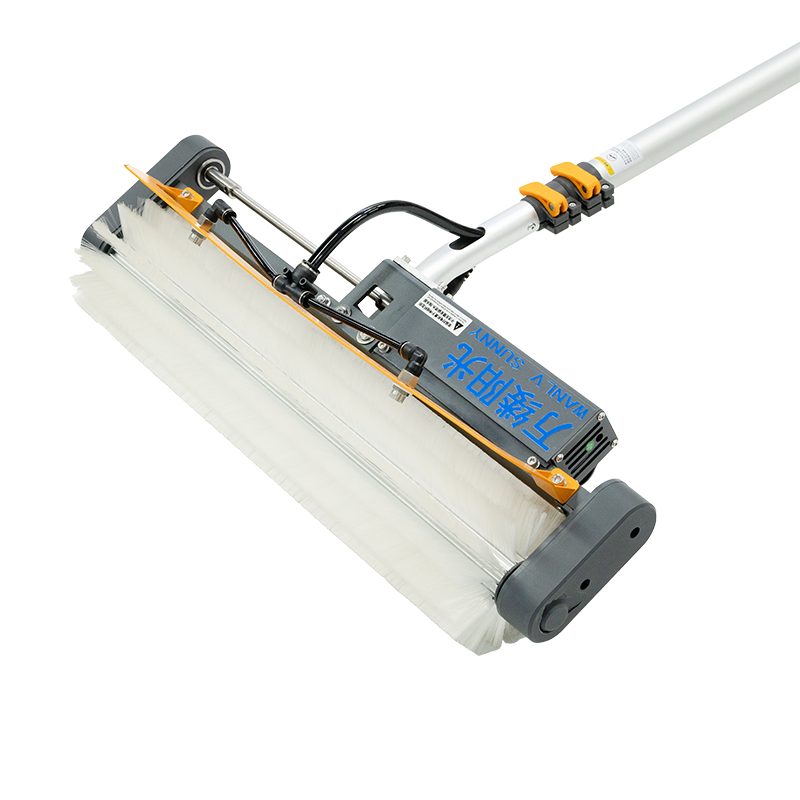
Why the Brush Roller Is a Consumable, Not a Lifetime Part
No matter how well a cleaning machine is built, the roller brush itself is a wear item. Nylon bristles flex against glass and frame edges thousands of times per minute, and every pass through a row of panels grinds fine dust, sand, and bird debris through the bristle tips. Over time three things happen: bristle length drops, bristle tips round off, and the brush applies less uniform pressure across the module surface.
Manufacturers are explicit about this. Our own product warranty, for example, covers the machine for 12 months but explicitly excludes natural wear and tear of brush heads — the same way tire wear is excluded on a vehicle. If your current supplier’s paperwork treats brush heads as a lifetime component, be skeptical.
There is also a protective angle. A worn roller does not just clean worse — it can risk more. When bristles wear unevenly, the exposed core or hardware can ride closer to the glass, and a roller caked with hardened slurry can drag abrasive particles across the anti-reflective coating. Replacing a roller on schedule is cheaper than warranty claims on scratched modules.
Five Signs It Is Time to Replace the Roller Brush
Field teams do not need a laboratory to judge brush condition. These five checks take minutes during routine maintenance:
- Bristle length loss. If bristles have worn down to roughly half their original length, contact pressure and fluffing action drop noticeably. Measure at several points along the roller — uneven loss is its own warning sign.
- Flattened or bent tips. New nylon bristles spring back after flexing. Worn bristles stay bent and glassy at the tips, which reduces the micro-scrubbing effect that lifts bonded dust.
- Streaking and residue. If panels show uniform wetting but leave wipe marks after a pass, the brush profile is no longer conforming to the glass. This often appears on one side first, where the roller rubs against frame edges.
- Rising motor load or falling speed. On machines with adjustable roller speed — our handheld units, for instance, run at up to 680 r/min — a worn brush forces operators to compensate with speed or pressure. If the roller stalls under light load or the motor overheats, bearing or bristle damage is likely.
- Visible debris embedment. Grit embedded deep in the bristle rows that no longer rinses out will scratch glass far more effectively than it cleans it.
Choosing the Right Replacement Roller
Match the bristle material to the glass
For most photovoltaic modules, soft nylon remains the safest and most versatile bristle material. It flexes against glass without scratching, holds up well in both dry and wet cleaning, and resists the common site chemicals found around utility-scale plants. Harder bristles or wire brushes should never touch a module face — they belong on frames and non-glass surfaces only. If you are deciding between bristle types for a specific site, our earlier guide on nylon bristle roller design covers how the double-head brush distributes contact pressure across two counter-rotating rollers.
Match the roller geometry to the machine
A replacement roller must match the machine’s mounting system, motor drive, and working width. A handheld water-fed brush such as the WLS-5 uses a 60 cm cleaning width with a 150 W motor driving the roller at up to 680 r/min, and the roller assembly integrates the water spray bracket and retaining plate. A tracked robot is a different animal entirely: our WLS-7PRO uses a 1,400 mm brush head driven by a dedicated 180 W brush motor. Mixing geometries between machines is not an option — order rollers specified for your exact model.
For O&M teams and distributors, the practical approach is to keep a small pool of genuine spares. Consumables like roller brushes, scrapers, and batteries are listed in our solar panel cleaning spare parts catalog, and ordering against the machine’s official parts list avoids the “close enough” mismatch that shows up later as vibration or water leaks.
How to Replace the Brush Roller, Step by Step
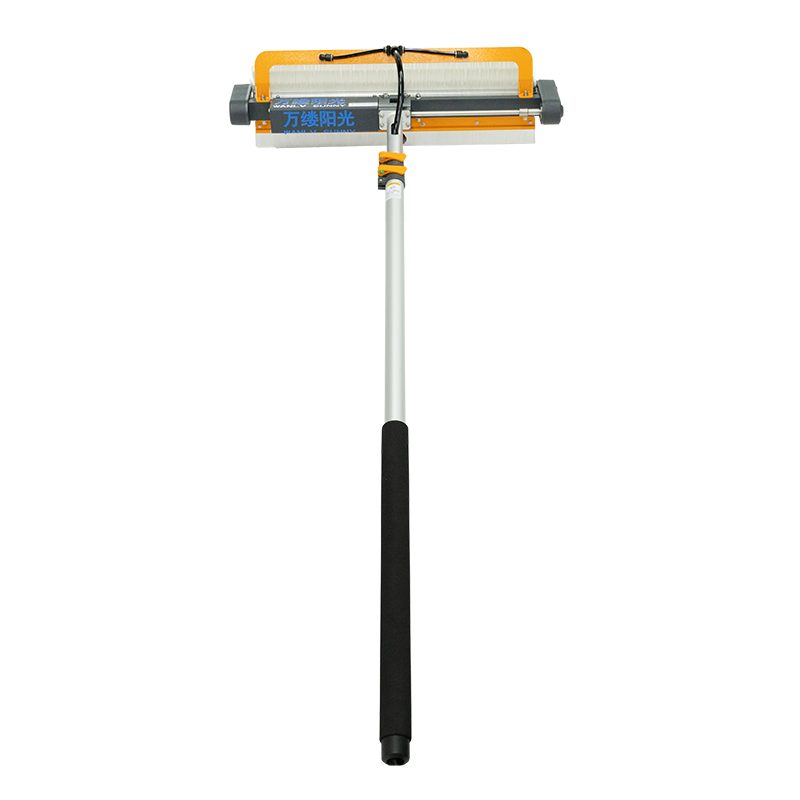
Water-fed pole brushes (handheld roller brush machines)
On our handheld roller brush machines, replacement follows the procedure in the official instruction manual and requires only a hex wrench:
- Power down the machine and disconnect the battery pack or power supply before touching any fastener.
- Using a hex wrench, remove the left-side shield (the side carrying the motor housing).
- Slide the worn roller brush head out of the mounting and set the new roller in place, aligning the drive coupling.
- Refit the left housing and side shield with the hex wrench, then rotate the roller by hand to confirm it spins freely without rubbing.
- Reconnect power, run the roller briefly with water flowing, and check for vibration or abnormal noise before returning to panels.
The same manual carries two reminders worth repeating to crews: never store the brush head or water pipe wet inside a sealed case, and keep the working environment below 40 °C for extended operation.
Tracked and remote-control cleaning robots
Robot platforms make roller replacement even simpler because the head is designed for quick field swaps. On models like the WLS-73S, the sweeping head and scraper assembly mount to the chassis with spring-loaded locating pins: pull both pin rings outward, lift the assembly off, and reverse the steps with the new unit. The user guide’s safety note is non-negotiable — remove the battery pack before any installation or disassembly.
For larger tracked platforms, the brush head is a separate module (the WLS-7PRO brush head weighs about 11 kg, so use two hands or a helper). Because the robot’s brush and scraper wear together, inspect both whenever you pull the head; replacing a roller but reusing a deformed scraper gives back half the improvement. The same maintenance chapter applies across our tracked solar cleaning robots, where the roller, scraper, and track pads are the three consumables to cycle on a schedule.
A short safety checklist
- Battery out, machine off, water off — before any fastener moves.
- Work on the ground or a stable platform, not mid-panel on a ladder.
- Gloves on: nylon bristle ends and spring pins pinch harder than they look.
- After reassembly, always do a no-load spin test before the roller touches glass.
Clean, Rotate, or Replace? A Field Decision Table
| Condition | Action | Why |
|---|---|---|
| Bristles dirty but full length, tips intact | Rinse and comb | Restores cleaning performance at zero cost |
| One side worn, other side serviceable | Rotate / flip roller if the design allows | Balances wear before replacement is needed |
| Bristles at ~50% length, tips rounded | Replace roller | Contact pressure and fluffing action already degraded |
| Grit embedded, bristles glassy or bent | Replace immediately | Scratch risk to module coating outweighs any cleaning value |
| Roller vibrates, motor stalls under light load | Inspect bearings / replace roller | Mechanical failure usually follows within weeks |
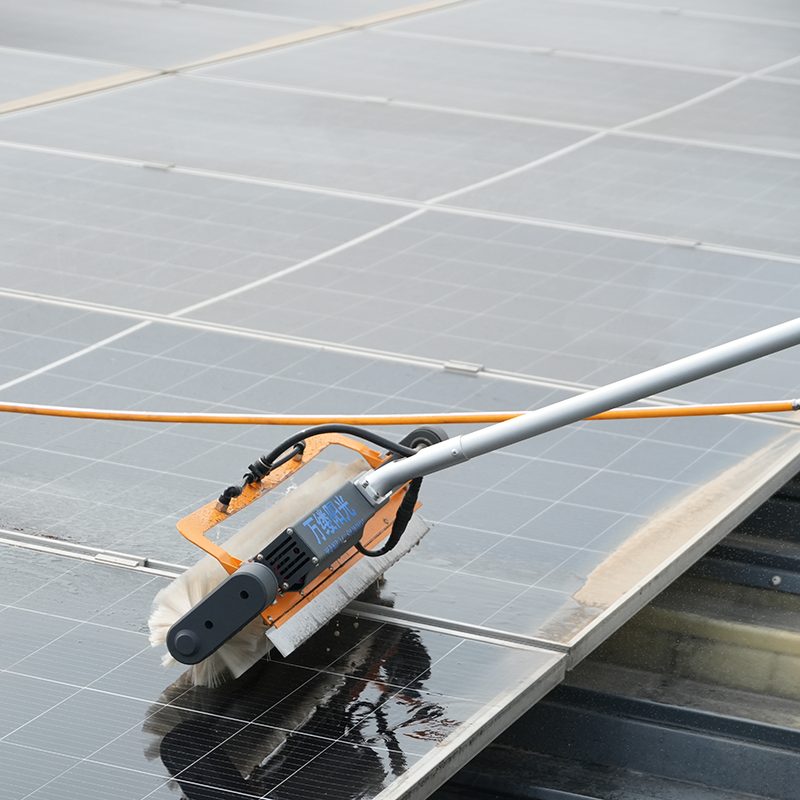
Maintenance Habits That Extend Roller Life
Replacement intervals vary enormously by site — a desert plant with airborne sand is far harder on bristles than a rooftop in a temperate climate, so there is no single month count we would print as universal. What we can do is share the habits that reliably stretch roller life between replacements:
- Rinse after every shift. Dissolved salts and cement dust harden between bristles overnight. A clean-water rinse through the roller at end of day is the single highest-value habit.
- Pre-wet heavily soiled rows. Running a dry roller across caked dust turns bristles into sandpaper. A pre-wet pass loosens the layer first.
- Stay within the specified pump pressure. Higher pressure does not scrub harder through the roller — it just drives grit deeper into the bristles and accelerates wear.
- Store dry and unsealed. Never box a wet brush head; trapped moisture deforms bristles and breeds odor. Hang the head or lay it flat in a ventilated space.
- Log roller hours. Teams that track operating hours per roller start predicting replacements instead of reacting to streaks.
Stocking Spare Rollers for O&M Fleets and Distributors
For service companies running multiple machines, roller brushes belong on the same stocking list as filters and track pads. A reasonable starting point is one spare roller per machine plus one shared reserve per fleet, adjusted upward for desert or high-soiling sites. Distributors serving regional customers find that consumables drive repeat visits — the roller that wears out every season is the product that brings the customer back to your counter, which is why we ship roller brushes as standard line items in the official spares list rather than special-order items. Current pricing and lead times for replacement rollers are available on request.
Teams that prefer manual cleaning on small or hard-to-reach arrays can pair robot fleets with a water-fed cleaning brush for manual crews, and the same replacement logic applies to its rollers.
The Bottom Line
Brush roller replacement is not a repair job — it is routine maintenance that takes minutes when planned and costs a day of cleaning quality when ignored. Inspect rollers on a fixed schedule, match replacements to the machine’s official parts specification, keep genuine spares on the shelf, and your panels will never know the difference.
If you need replacement rollers for an existing fleet, or want roller consumables added to a distributor package, send Wuxi Wanlv Intelligent Technology Co., Ltd. (WANLV SUNNY) your machine model and working width — we will confirm the correct roller and current availability within 8 working hours.
Talk to the WANLV SUNNY Team
WANLV SUNNY is a solar panel cleaning equipment manufacturer based in Wuxi, Jiangsu, China. We build tracked cleaning robots, water-fed brush systems, fixed cleaning installations and the rollers, pumps and batteries that keep them running — with 30+ patents and machines in service across utility-scale, rooftop and floating solar plants worldwide.
Wuxi Wanlv Intelligent Technology Co., Ltd.
Rm 507-508, No. 999 Gaolang Road, Binhu District, Wuxi, Jiangsu, China
Vicky — vicky@wanlvsunny.com
Ziggy — ziggy@wanlvsunny.com
WhatsApp: +86 181 1576 1000 / +86 181 5152 7178
Quotes, drawings and roller recommendations within 8 working hours, Monday to Saturday.


