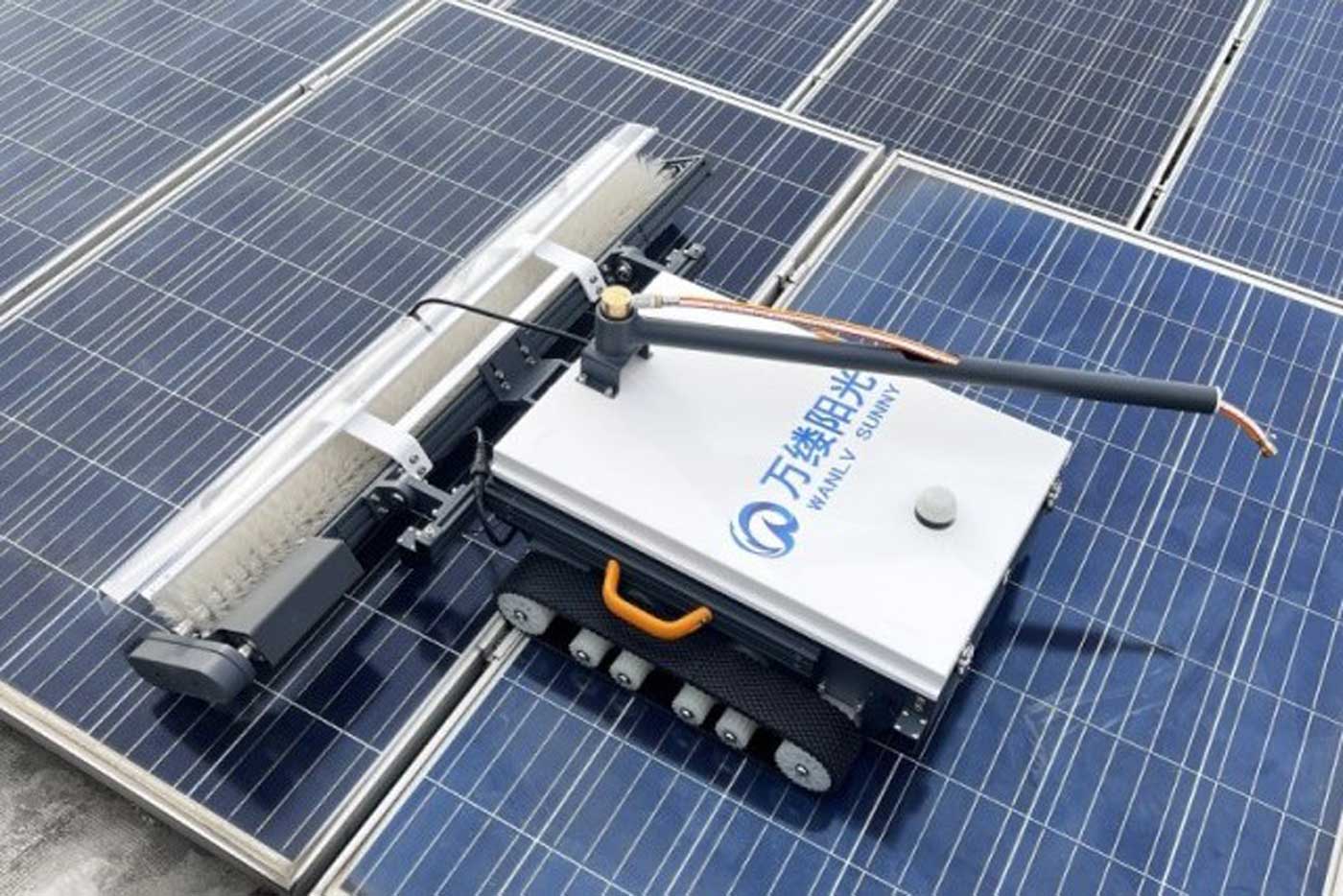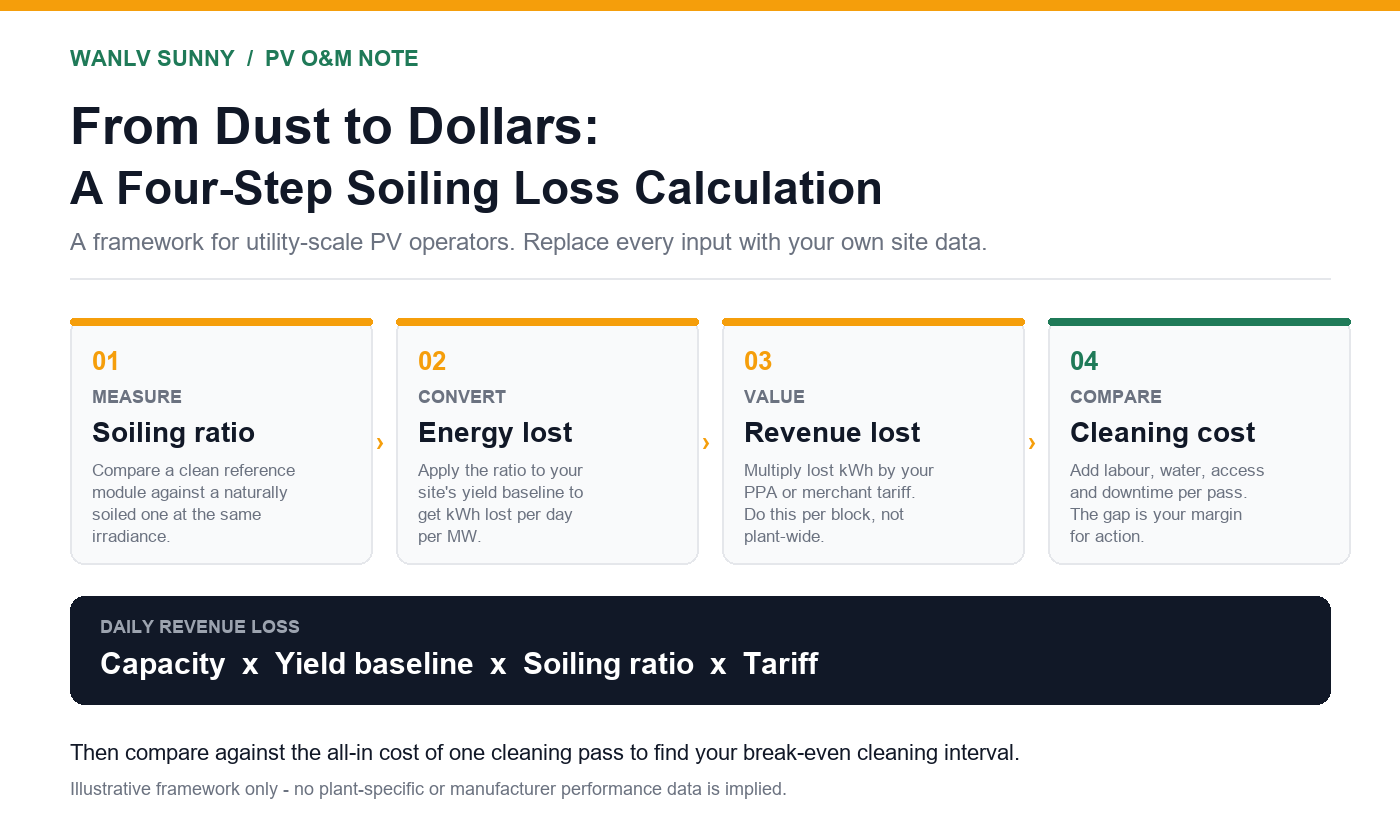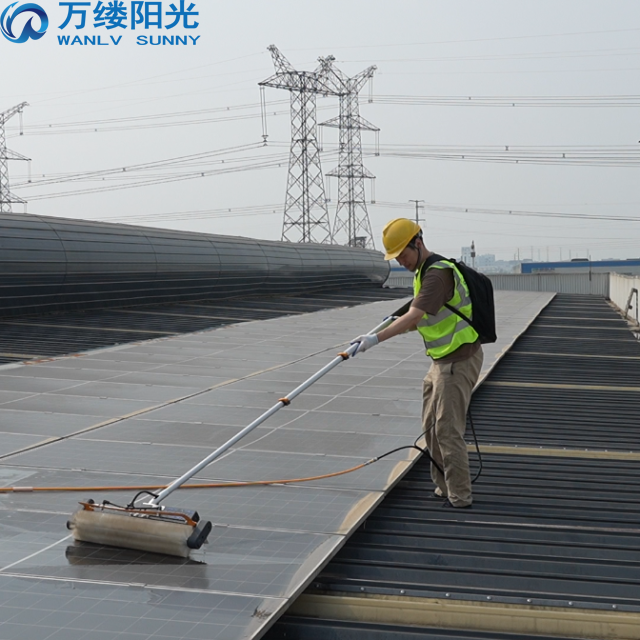
When crews plan solar panel cleaning, the pump is usually the last thing on the shopping list — after the robot, the brush and the water tank. Yet on site, the pump decides whether water arrives at the far end of a row with enough force to rinse, whether the brush keeps a steady film of water on the glass, and whether the operator spends the day fighting a starving machine instead of cleaning panels.
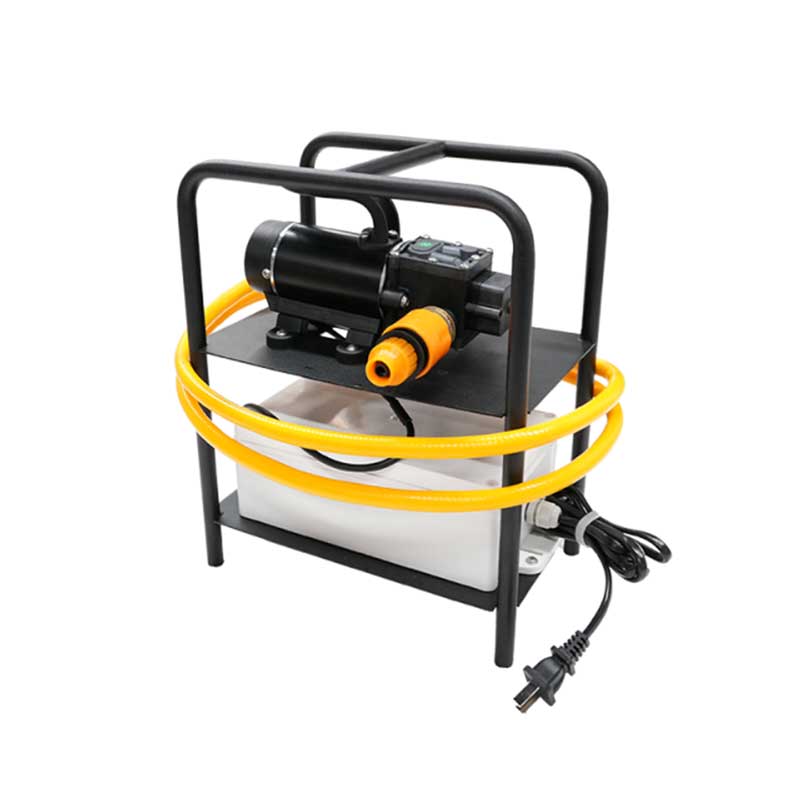
This guide explains how to choose a water pump for solar panel cleaning in plain engineering terms: which specifications actually matter, how to read them, and how to match a pump to your array layout. We will use the WLS-EP80 water pump for solar panel cleaning as a worked example, because its published specifications cover the four numbers every buyer should check.
Why the Pump Matters as Much as the Brush
Cleaning quality comes from the combination of mechanical action and water. The brush or roller lifts bonded dust, pollen and bird droppings; water suspends the loosened soil and carries it off the glass. If water flow is weak or arrives in pulses, the abrasive layer stays on the panel and the bristles grind it across the coating instead of flushing it away.
This is why an undersized pump does not just slow a job down. It shifts the work to the brush, accelerates bristle wear, and raises the risk of streaks and micro-scratches — the same failure mode described in our solar panel cleaning brush roller replacement guide. The pump, the hose and the roller should be specified as one system, not bought separately and hoped to fit.
Five Specifications That Decide Whether a Pump Fits Your Site
1. Working pressure — and what it can actually do
Pressure loosens soil and keeps water moving through long hose runs. Read the unit carefully: 0.8 MPa is about 8 bar, not 80 bar. The WLS-EP80, for example, lists a 0.8 MPa working pressure, which positions it as a plug-in delivery and rinse pump for brush systems — not a pressure washer.
That distinction matters for panel safety. Photovoltaic glass and anti-reflective coatings do not need jet-washer pressure; they need a reliable flow of clean water matched to the brush. Excessive pressure drives water past seals, stresses fittings and encourages operators to spray too close to module edges. If a supplier markets a solar cleaning pump purely on maximum pressure, ask for the working pressure and the recommended nozzle or brush configuration instead.
2. Horizontal delivery distance
Every meter of hose costs pressure and flow. The WLS-EP80 is rated to deliver water up to 80 meters horizontally, which suits row lengths found on commercial rooftops and many ground-mount blocks. To apply that number to your own site:
- Measure the longest run from the water source to the farthest cleaning position, including detours around inverters and cable trenches.
- Check the hose diameter your pump and brush expect; a long, narrow hose can undo a pump’s rated reach.
- Plan where the pump sits so the hose run, not the extension cable, is the shortest of the two.
If your rows are longer than the pump’s rated horizontal reach, the answer is not to run the pump beyond spec — it is to move the water source, stage a tank, or use a pump specified for the longer run.
3. Suction lift and water source
The WLS-EP80 lists a 2-meter suction height. In practice that means it can draw from a ground-level tank or container without a booster arrangement, which is exactly how most cleaning crews work. When evaluating suction lift:
- Confirm the vertical distance between the water surface — at its lowest expected level — and the pump inlet.
- Use a strainer or filter on the intake if you draw from tanks that collect dust or debris.
- Prime the pump as instructed and avoid repeated dry starts, which are a common cause of early pump failure on any brand.
4. Power supply and current draw
The WLS-EP80 runs on a 220 V supply with a 120 W motor. Plug-in pumps like this are simple to deploy wherever site power exists, and the low power draw keeps generators and distribution boards comfortable. Before ordering, confirm the voltage standard at your sites and check the plug type, cable length and whether your team will need IP-rated outdoor connections. A pump that cannot be powered safely is not a bargain at any price.
5. Compatibility with the cleaning machine
A pump must match the machine it feeds. Water-fed brush systems, telescopic pole setups and wet-cleaning robots each have their own hose fittings, flow expectations and pressure limits. If you are buying for an existing fleet, note the machine model and hose diameter when requesting a pump quote. If you are building a new kit, source the pump alongside the other solar panel cleaning accessories so the fittings, flow and pressure are confirmed as a matched set.
WLS-EP80 Specifications at a Glance
| Specification | WLS-EP80 |
|---|---|
| Type | 80M plug-in pump |
| Model | WLS-EP80 |
| Operating voltage | 220 V |
| Power | 120 W |
| Working pressure | 0.8 MPa (about 8 bar) |
| Horizontal delivery | Up to 80 m |
| Suction height | 2 m |
Read together, these numbers describe a compact, mains-powered delivery pump for professional cleaning systems: enough reach for typical commercial rows, a working pressure suited to rinsing through brushes, and a low power draw that keeps deployment simple.
Matching a Pump to Three Common Site Types
| Site type | What to prioritize | Why |
|---|---|---|
| Commercial rooftop | Weight, reach from the water source, safe power connection | Hose runs detour around roof equipment, and everything must be carried up and down safely |
| Utility-scale ground-mount | Rated horizontal distance, stable flow, tank integration | Long rows punish undersized pumps and narrow hoses |
| Robotic or semi-automated cleaning | Manufacturer-confirmed compatibility and steady pressure | Machines expect water within a defined flow and pressure window |
A Field Checklist Before You Order
- Sketch the water path. Note the longest hose run, vertical lifts and the position of the tank or tap.
- Record the power available. Voltage, plug type, cable route and whether the connection will be used outdoors.
- List the machines the pump will feed. Include model, hose diameter and any manufacturer flow or pressure guidance.
- Confirm the water source. Tank, IBC, tap or bowser — and whether the intake needs a filter.
- Ask for the working values, not just peak marketing numbers. Working pressure, rated reach, suction lift and duty cycle tell you how the pump performs through a shift.
- Plan spares and consumables. Fittings, seals and hose ends are cheap; waiting a week for them mid-contract is not.
Five Mistakes That Shorten Pump Life
- Running the pump dry. Most transfer pumps rely on water for lubrication and cooling. Prime first, watch the tank level, and shut down before the source runs out.
- Dragging the pump by its hose or cable. Fittings and cable glands are the first casualties of site handling.
- Using mismatched hose diameters. A restrictive hose makes the pump work harder and starves the brush at the far end.
- Skipping the intake filter. Dust and debris from tanks cause clogs and seal wear that look like “pump failure” on the warranty claim.
- Storing the pump wet and coiled tight. Drain, rinse and store dry with the hose loosely coiled to protect seals and fittings between jobs.
Electrical and Water Safety on Panel Sites
Water and mains power on the same roof demand discipline. Use rated outdoor connections, keep cables and hoses on separate routes, and test residual-current protection before the first shift. Release hose pressure before disconnecting fittings, and never modify a pump’s pressure settings or relief hardware to chase more cleaning force. If a site requires longer cable runs, calculate the load rather than improvising with chained extension reels.
How to Request the Right Pump Quickly
The fastest way to get a usable pump recommendation is to send the supplier four facts: your longest hose run, the vertical lift from the water source, the power available, and the cleaning machine the pump will feed. With those, an equipment manufacturer can confirm whether a standard model fits or whether the site needs a different specification. For teams pairing pumps with water-fed solar cleaning brush systems, matching the two at order stage avoids most compatibility surprises.
The Bottom Line
Choose a solar cleaning pump by the numbers that govern your site: working pressure, horizontal reach, suction lift, power supply and machine compatibility. A correctly specified pump protects the roller, speeds the crew and rinses panels cleanly; an undersized or mismatched one quietly taxes every shift. Send Wuxi Wanlv Intelligent Technology Co., Ltd. (WANLV SUNNY) your row length, water source and machine model — we will confirm the right pump configuration within 8 working hours.
A pump is only one link in the water-delivery chain. Browse the full solar panel cleaning equipment range, or go straight to the cleaning machines, cleaning robots and spare parts and accessories that pair with it.
Talk to the WANLV SUNNY Team
WANLV SUNNY is a solar panel cleaning equipment manufacturer based in Wuxi, Jiangsu, China. We build tracked cleaning robots, water-fed brush systems, fixed cleaning installations and the rollers, pumps and batteries that keep them running — with 30+ patents and machines in service across utility-scale, rooftop and floating solar plants worldwide.
Wuxi Wanlv Intelligent Technology Co., Ltd.
Rm 507-508, No. 999 Gaolang Road, Binhu District, Wuxi, Jiangsu, China
Ziggy — ziggy@wanlvsunny.com
Vicky — vicky@wanlvsunny.com
WhatsApp: +86 181 5152 7178 / +86 181 1576 1000
Quotes, drawings and pump recommendations within 8 working hours, Monday to Saturday.